Introduction
In most credit repair businesses, every new client costs the owner hours, so the business quietly caps itself at whatever you can personally handle. Scaling means removing yourself from every step that repeats.
Automate the cycle
The dispute cycle is the same loop for every client, every month: pull the report, read it, pick items, write letters, mail them, wait, read the results, go again. Every step of that loop except one can run without you.
Approve, don't do
The step you keep is judgment. Your day shifts from doing tasks to reviewing decisions: read what was prepared, approve what's right, correct what isn't. Ten minutes of approvals can move fifty clients. That's the difference between running a caseload and running a business.
Hiring, later than you think
Software should push your first hire out much further than the old model did. And when you do hire, hire for conversations, not dispute expertise, because the expertise lives in the system. Give people the access their job needs and nothing more, and keep charging authority locked down.
Watch the numbers
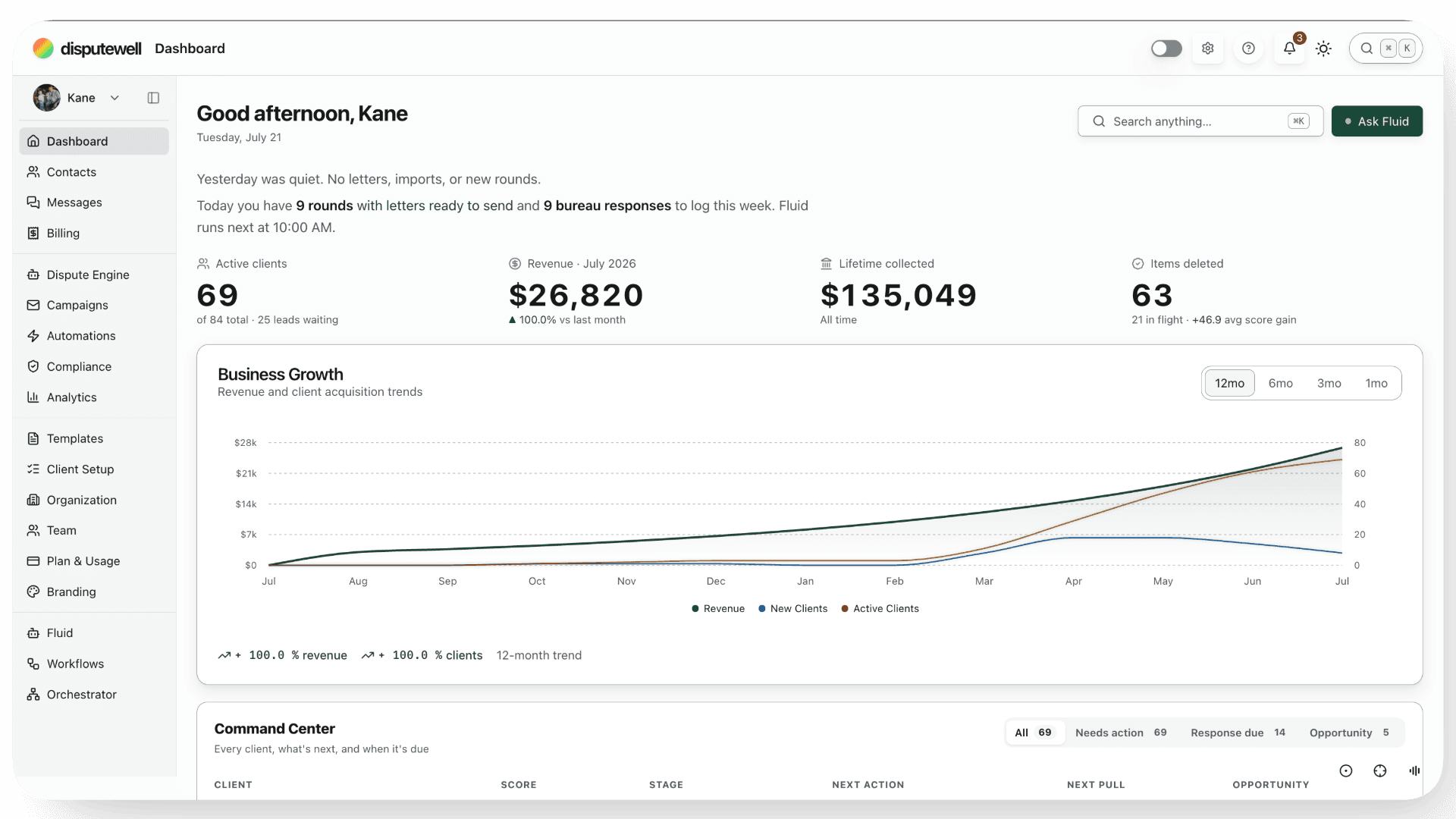
Scale changes what you look at. Client count and revenue tell you where you are. Deletions in flight and score gains tell you where you're going. And once you know which dispute strategies actually earn deletions for your book, you stop guessing what to send.