


Introduction
Most people in this industry send letters without knowing what happens on the other end. That's why most letters fail. This chapter walks through the pipeline your dispute actually travels, what survives it, and how rounds are supposed to build on each other.
What happens to your letter
When your dispute arrives at a bureau, a person reads it with about four minutes to spend. They don't study your argument. They boil the whole letter down to one of 29 dispute codes, and an automated form carries that code to the company reporting the debt. That company's default move is to check the code against its own records and answer verified. Nobody re-reads what you wrote.
Regulators' studies found that roughly 90% of disputes collapse into the same four generic codes. That's the pipeline. Long emotional letters, template walls, and clever wording all get crushed into the same code as everyone else's mail.
What actually gets deletions
A letter survives that pipeline when it makes one specific claim the data itself backs up. Credit reporting runs on a rulebook called Metro 2, the format every creditor uses to report your client's accounts. When the reported data breaks those rules, or the three bureaus contradict each other, you have a claim that doesn't depend on anyone's sympathy. The reviewer can see it in their own records.
That's the whole philosophy. Don't argue, point. One item, one field, one contradiction, backed by the law that requires accuracy.
Rounds and escalation
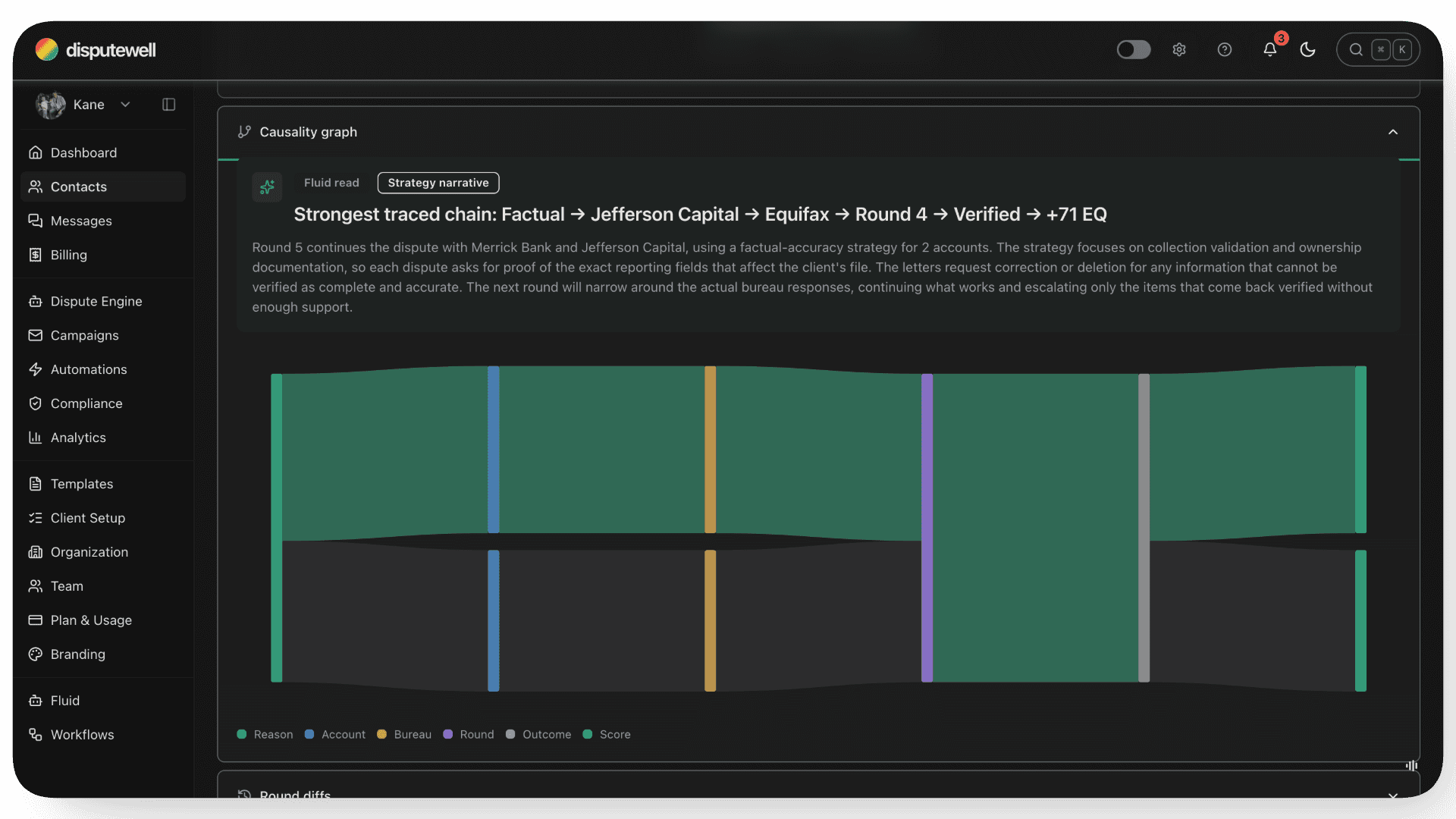
After you mail, the FCRA gives bureaus about 30 days to investigate and respond. What comes back decides your next move, and this is where most of the industry gets lazy. Rewording round one and sending it again is not a round two.
A real round two answers what happened. If they said verified without showing how, the next letter demands the method. If they went silent past the deadline, the next letter demands deletion, because that's the law's own remedy. If a deleted item sneaks back on, there are specific rules about reinsertion and your letter should cite them. Every response has a correct next move.
When not to dispute
Here's the part that keeps you in business for the long run: some accounts give you nothing to work with, and the right move is to not dispute them. The dispute-everything model made a lot of money for a while, and the biggest company that ran it ended with a $2.7 billion judgment.
No grounds, no dispute. Your clients get honesty, the bureaus get letters they can't dismiss, and you get a business that survives an audit.
Reading the results
Every round ends with a new report, and the new report is the scoreboard. Compare it against the last one, per bureau: what got deleted, what changed, what got verified, and what never got answered. Deletions get credited to the round that earned them, which is how you learn what actually works for your book.